


Each production line has its own features related to performance, spatial layout, and technical requirements. However, there are key parameters that must be considered at the planning stage. On this page, we have compiled the main ones — from floor space and energy consumption to raw material requirements and auxiliary equipment.
Key parameters to consider:
Storage facilities
A dedicated area should be provided for storing raw materials and finished products. The space must be dry, protected from external impacts, and compliant with chemical storage requirements.
Ventilation system
Production requires a well-organized supply and exhaust ventilation system. It must ensure the removal of resin vapors, dust, and other process emissions, in compliance with occupational safety requirements.
Personnel
Most lines are designed for a minimal number of operators thanks to a high degree of automation. Staffing requirements depend on the automation level and shift organization.
Water consumption
The production process includes water-intensive stages. A closed-loop water system is recommended for efficiency and sustainability. Consumption volumes and water treatment requirements are specified separately.
Equipment dimensions
The size of the equipment may vary depending on the model and configuration. It is important to plan in advance for the length, width, and height of the installation, as well as the necessary clearance for operation and maintenance.
Power supply and energy consumption
The line requires stable industrial power supply. Planning must take into account both average load and possible peak values, as well as voltage and frequency parameters.
Floor space
When planning the installation of a production line, it is essential to account for sufficient space for equipment, service areas, technological passages, and storage zones. Exact requirements depend on the specific line configuration.
See also:
- CG-4 Manufacturing line for the production of fiber-reinforced polymer rebar
- CG-1 Manufacturing line for the production of fiber-reinforced polymer rebar
- СG-8 Bent Element Production Line
- Manufacturing line for the fiber-reinforced polymer rebar grid
- CG-11 Manufacturing line for the production of fiber-reinforced polymer anchors
Supply Contract Terms


Additional Equipment:
Transport and lifting equipment
During commissioning and operation, it is necessary to have means for transport and lifting: trolleys, cranes, forklifts, and other auxiliary equipment.
Tools, scales, cutting and measuring devices
Operation of the line requires additional equipment: measuring instruments, hand tools, cutting devices, as well as packaging and material handling equipment. A complete list is provided when selecting the configuration.
Raw Materials

Material quality
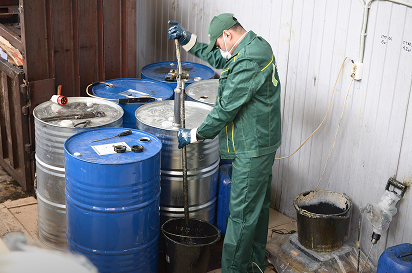
Stable and safe operation of the line requires the use of certified materials that meet technological requirements. It is recommended to use raw materials from trusted suppliers that have passed incoming inspection.
Material consumption
Consumption volumes depend on product specifications, operating modes, and line configuration. This information is provided during the technical approval stage.
Raw material storage
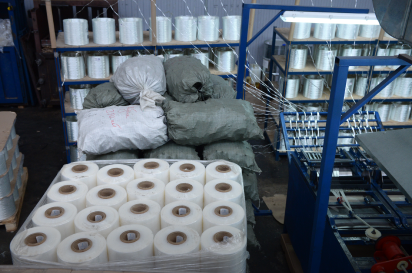
Raw materials must be stored in specially equipped facilities with temperature and humidity control. This is particularly important for materials sensitive to environmental conditions.